Walk any PTAC hotel at 2 PM and listen. Behind a lot of closed doors, units are running hard in rooms where nobody is home. The guest set it to 64 at breakfast and left for the day, or checked out and housekeeping never touched the controls. Your PTAC doesn’t know the difference, so it keeps going.
That’s the biggest source of wasted energy we see in guest rooms. The good news is that you usually don’t need new PTACs to fix it. You need the room to know when it’s empty.
Where PTAC energy actually goes
A PTAC is simple: a thermostat calls, the unit runs. In most hotels that thermostat answers only to whoever touched it last. That creates three kinds of waste:
- Occupied-then-empty rooms. Guests leave for meetings, the pool or dinner with the room set to extreme temperatures.
- Unsold rooms. Vacant rooms drift, or worse, sit at whatever the last guest chose for days.
- Doors and windows. A balcony door left open with the unit at full cooling is paying to air-condition the parking lot.
None of this shows up as a line item. It shows up as a utility bill that doesn’t drop when occupancy does.
How occupancy-based thermostats fix it
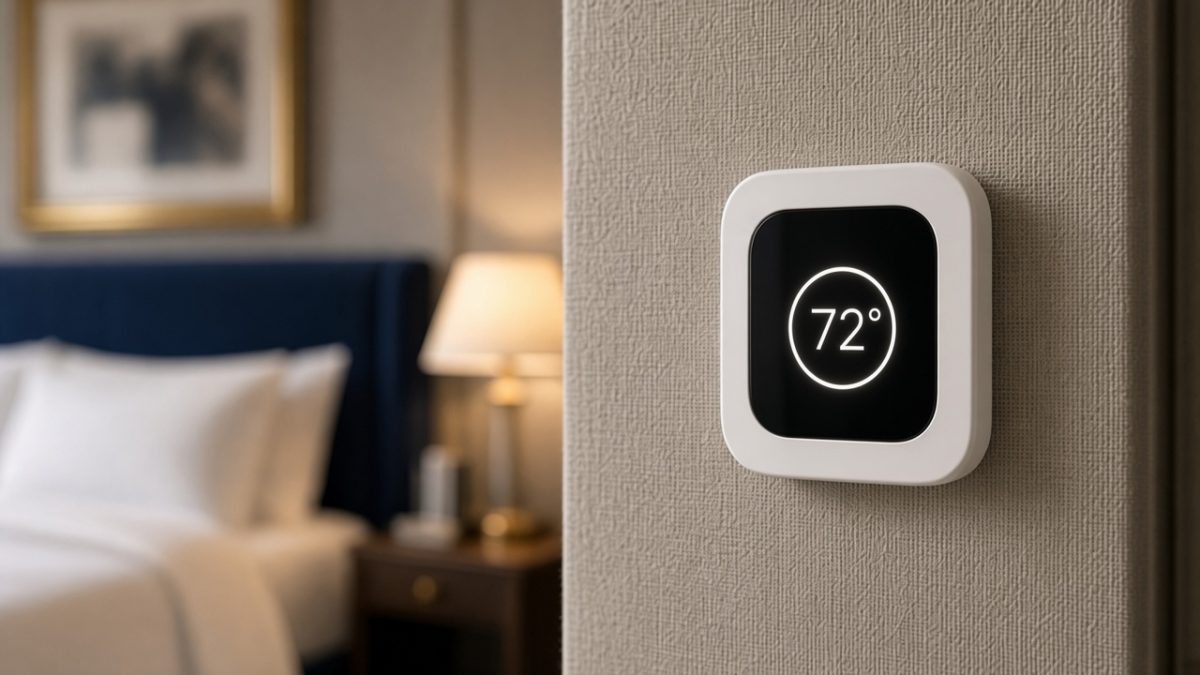
An occupancy-based guest room thermostat pairs the controls with an in-room sensor (and often a door sensor). When the room is empty, it eases back to a setback temperature. When the guest returns, it recovers to their setting before comfort suffers.
On average, properties see 20–35% reductions in HVAC energy use, with a typical payback of 12 to 18 months, often sooner with utility rebates.* The savings come from runtime you were paying for that no guest ever felt.
A few details make the difference between a system that saves and one that gets overridden:
- The right setback. Too aggressive and guests come back to a hot room and complain. Too gentle and you leave savings on the table. Climate and humidity matter here, especially in the South.
- Fast recovery. The room should feel right within minutes of the guest walking in.
- Unsold-room control. Rented and unrented rooms should be handled differently. Empty inventory shouldn’t be conditioned like occupied rooms.
- Humidity awareness. In humid markets, letting rooms float too far can invite moisture problems. Setbacks should be tuned for that, not just for temperature.
Do you need to replace your PTACs?
Usually not. Most guest room energy management works with the PTACs you already have, along with VTACs, fan coils and splits in the same building. During a survey we check each room type, confirm what the units support, and flag any units that need attention before controls go on.
Mixed buildings are common: PTACs in standard rooms, fan coils in suites, an older wing with different wiring. That’s why we survey every room type first and spec controls to the HVAC that’s really there, across all hotel brands.
What it looks like for your team
For your engineer, an install shouldn’t become a second job. We plan the work floor by floor around your occupancy so rooms come back online quickly, then program, test and document every room.
For your front desk and housekeeping, very little changes. Guests still set their own temperature. The system simply stops conditioning rooms that are empty.
After go-live, every system we install is continuously managed by our sister company, LiveXpert. Systems are checked daily, alerts are handled, and your site team gets a direct contact for troubleshooting. A sensor that drifts or a setting someone changed can quietly undo savings, so someone needs to be watching.
Rebates can shorten the payback
Many utilities pay toward guest room energy controls, especially systems with in-room occupancy sensing. Most require pre-approval before installation, so check before you buy anything. You can search by state, province or utility on our Rebates page, and we confirm your rebate for your exact address. We handle the applications, inspections and follow-up.
A quick self-check for your property
- Count rooms by HVAC type: PTAC, VTAC, fan coil, split, or “not sure.”
- Pull 12 months of utility bills and compare them with your occupancy. If energy barely moves when occupancy dips, empty rooms are likely running.
- Walk a floor midafternoon. Count how many vacant or unattended rooms have units running.
- Check brand requirements. Many brands are moving toward energy management in guest rooms. If you’re an IHG property, see our IHG December 31 page.
FAQ
Will guests notice the setback? Not when it’s tuned well. The room eases back only when it’s empty and recovers when the guest returns. Guests keep control of their own temperature.
Does this work for multifamily too? Yes. Vacant and turnover units waste energy the same way, and setbacks can be managed remotely without sending maintenance to every unit.
How long does an install take? It depends on room count and HVAC mix. We plan it floor by floor around your occupancy, so rooms are out of service as briefly as possible.
See what your rooms could save
Our free assessment looks at your rooms, your HVAC and your brand standard, confirms your rebate and gives you a plan. See how we work or learn more on our hotels page.
Book your free assessment → or call our team at (561) 762-9500
*Savings and payback vary by utility rates, climate, HVAC type, occupancy and available rebates. Rebate amounts, approval and timing are set by each utility and can change; we confirm eligibility for your exact address before you commit.